
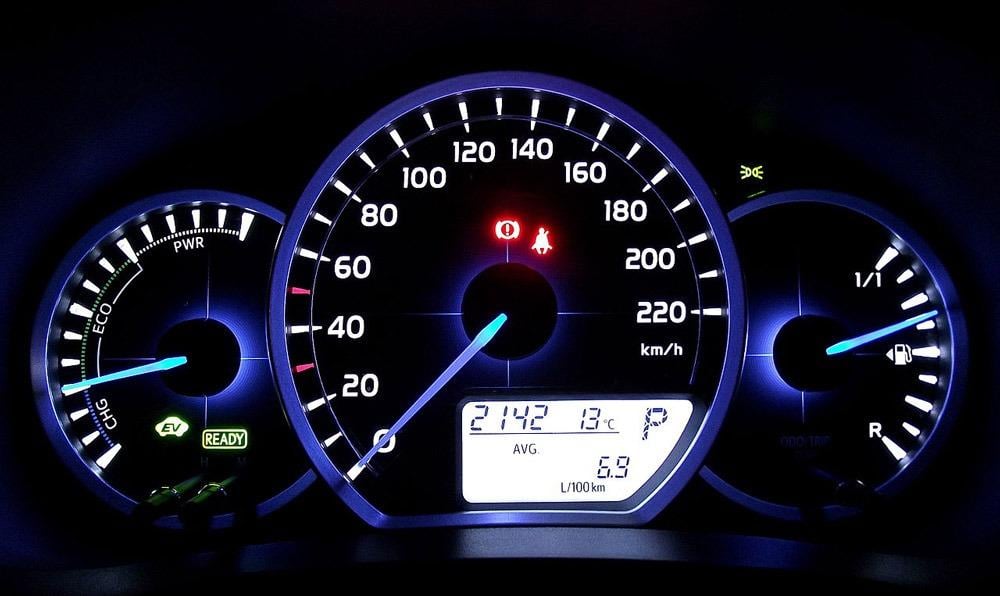
The different types of dashboard lights are among the most essential elements in the car's lighting system. They provide the driver with vital information about the car's condition and performance, from warning lights to information lights. These lights provide immediate notifications about various systems that need attention or repair. If you are looking to improve your car's dashboard performance or are searching for high-quality bulbs that meet your needs, choosing the right types is a crucial step. Choose the best types of dashboard lights from Car Qozom Auto Parts Store , where we offer a diverse range that incorporates the latest technologies and designs to ensure the best performance, highest quality, and lowest price.
What types of dashboard lights are there?
The dashboard is an essential part of the driving experience, providing the driver with the information necessary for safe and balanced driving. It also provides the driver with essential information while driving, illuminating to indicate a variety of conditions and dashboard warning lights that indicate problems in the car. Some of the most important types of dashboard lights are:
- The Check Engine Light indicates a problem with the car's engine or emissions control system.
- The battery light illuminates when there is a problem with the car's electrical system, such as a dead battery or a problem with the alternator.
- The oil pressure light illuminates when the engine's oil pressure drops, indicating an urgent need to check the oil system.
- The engine temperature light indicates that the car engine has become too hot and may be damaged if it is not cooled down.
- Turn signal lights, of which there are two types (right and left turn signals), illuminate to indicate the direction the driver intends to take.
- The high beam indicator light illuminates when the high beam headlights are switched on to improve the driver's visibility in the dark; it is one of the car's front lights.
- The fuel level light illuminates when the fuel level in the car's tank is low.
- The brake warning light indicates a problem in the braking system, such as a low brake fluid level or a problem with the braking system itself.
- The Airbag Warning Light indicates a malfunction in the airbag system.
Dashboard light specifications

What are dashboard lights? The types of dashboard lights vary according to their meanings, and their specifications depend on the function they perform. The specifications differ in terms of color, as dashboard lights come in different colors to indicate the importance of the signal, such as red, which are warning lights in the car that warn of a serious problem, yellow for less important warnings, and green for normal signals such as turning on the lights.
Likewise, brightness specifications: dashboard lights must be bright enough to be clearly visible day and night, but not so bright as to distract the driver or harm the eyesight. They must also be designed to be long-lasting and resistant to vibrations and heat.
The types of dashboard lights vary between traditional halogen bulbs and modern LED bulbs that provide better brightness and consume less energy. One of the most important benefits of dashboard lights is that they help the driver to quickly identify potential problems in the car, enabling him to take the necessary actions to avoid breakdowns or accidents. They also provide the driver with immediate information about the condition of the car, which helps to provide a comfortable and safe driving experience. Through early warning signals, the driver can deal with minor problems before they worsen and become more costly.
Regularly inspect all types of dashboard lights to ensure they are working correctly. Do not ignore warning lights when they appear. Inspect the car as soon as possible and use the owner's manual to understand the meanings of all the dashboard lights in your car and how to deal with them. Dashboard lights are an essential tool to ensure the safety and comfort of the driver while driving, so it is important to understand them and monitor them regularly.
Functions of different car dashboard lights
The car's dashboard lights have many functions and tools that provide the driver with vital information about the car's condition and performance. Among the most important functions of the car's dashboard are:
- The speedometer displays the current vehicle speed in kilometers or miles per hour and helps the driver adhere to speed limits and ensure safe driving.
- The tachometer displays the engine's revolutions per minute (RPM) and helps the driver shift gears correctly to maintain engine efficiency and prevent over-running.
- The fuel gauge displays the remaining fuel level in the car's tank and helps the driver know when they need to refuel.
- The engine temperature gauge displays the engine temperature, helping the driver monitor it to prevent overheating that could lead to engine damage.
- The odometer displays the total distance traveled by the car since it was first used, and it helps in tracking car usage and planning periodic car maintenance.
- A trip meter displays the distance traveled by the vehicle on a specific trip or within a defined time period and is useful for tracking short distances or monitoring fuel consumption.
- Warning lights include a variety of lights that indicate problems or issues requiring attention, such as the check engine light, oil pressure light, battery light, and others. They alert the driver to potential problems in the car, helping them take the necessary steps to avoid breakdowns or accidents.
- Turn signal indicators, which illuminate to indicate the direction the driver intends to take (right or left), help inform other drivers of the driver's intentions, thus enhancing road safety.
- The high beam indicator light illuminates when the car's high beams are switched on, letting the driver know that the high beams are on to improve visibility in the dark.
- The Multi-Function Display shows a variety of information such as instantaneous fuel consumption, remaining fuel quantity, directions, audio settings, and more, providing the driver with useful information in a focused and organized manner.
- The navigation system displays maps and directions to reach the desired destination and helps the driver find the best and fastest routes.
- Audio and Entertainment Control provides tools to control the car's audio and entertainment system, allowing the driver and passengers to enjoy entertainment during the journey.
- The Airbag Warning Light indicates a malfunction in the airbag system and alerts you to the need to check the safety system.
- Dome lights serve the driver and passengers when interior lighting is needed for easier visibility, such as the front dome light for the Elantra 2007-2011.
- And many roof lights that fit all cars, such as the Sonata 2015-2017 roof light .
These are the functions and benefits of the different types of dashboard lights. It is important to know that these various tools on the car dashboard help the driver monitor the condition and performance of the car, which contributes to improving the driving experience, ensuring safety on the road, and reducing the risks of accidents and violations.
How to replace car dashboard bulbs

Replacing car dashboard bulbs can be a simple process if the correct steps are followed and the required tools are prepared: a Phillips and/or flathead screwdriver, small pliers, suitable replacement bulbs (make sure the specifications match the current dashboard bulbs), and gloves to protect the bulbs from oils and fingerprints.
Steps to replace car dashboard lights
- Disconnect the battery before starting to ensure safety.
- Disconnect the negative (black) cable from the battery.
- Removing the instrument panel
- Locate the screws that hold the instrument panel in place.
- Use a screwdriver to remove them; you may need to remove parts of the dashboard surrounding the instrument panel to access the screws.
- Pull out the instrument panel after gently removing the screws; you will need to disconnect some electrical cables connected to the panel.
- Accessing the dashboard lights after identifying the locations of the dashboard lights that need replacing
- Use small pliers to gently unscrew the old light bulbs.
- Carefully install the replacement bulbs in the same places where the old bulbs were removed, and make sure the new bulbs are properly installed.
- Wearing gloves will protect the bulbs from oils and fingerprints that can affect their lifespan.
- After replacing the bulbs, carefully reinstall the instrument panel.
- Connect the disconnected electrical cables and secure the instrument panel in place using screws.
- After making sure everything is in place, reconnect the negative battery cable.
- Start the car and test the new bulbs to make sure they are working properly.
The most common dashboard light problems and how to fix them
All types of dashboard lights provide vital information to the driver, but they may sometimes encounter some common problems that disrupt their function and deprive the driver of important information. Therefore, these problems should be identified and solved:
- The dashboard lights do not illuminate when the car is started due to a blown fuse or burnt-out bulbs, and this should be investigated.
A problem with the electrical circuit or connections; solutions: Check the fuse connected to the instrument panel and replace it if it is burned out.
- If the light bulbs are burnt out, replace them with new ones. The electrical circuit should be checked, and the connections and wiring should be inspected. Damaged wires should be repaired or replaced.
- The problem of warning lights remaining constantly illuminated indicates an actual problem in the system the light is pointing to, such as the brake system, engine, or battery. A faulty sensor or a system malfunction could also be the culprit, which is a software issue in the electronic control unit (ECU). The solution is to inspect the system the light is pointing to, such as the engine, brake system, or battery. If the sensor is faulty, replace it. If there is a software problem, inspect the ECU; it may need reprogramming or replacement.
- Dashboard lights turning on and off randomly could be caused by unstable electrical connections, a problem with the control unit, or electrical interference. Solutions include checking all electrical connections to ensure they are secure and stable, and verifying there is no electrical interference from other devices in the vehicle.
- Dim or uneven dashboard lighting could be caused by old or unsuitable bulbs, a problem with the dashboard lighting control switch, or damage to the lighting unit. The solution is to replace the bulbs, check the lighting control switch and ensure it is working correctly, and if the lighting unit is damaged, repair or replace it.
Periodic inspection of all types of dashboard lights is required to ensure they are working correctly, and the vehicle's periodic maintenance schedules should be followed to ensure all systems are maintained regularly.